What's so Bad about Socialism?
Fred Gielow. September 13, 2026.

The road back home

What's so bad about socialism is that it sounds so good. Who doesn't want free stuff? Free bus rides? Great! Free baby sitting? Nice! Free health care? Wonderful! Free food and housing? Sign me up. But, there's a catch. (There's always a catch.) None of this free stuff is free!
Bus drivers aren't willing to drive all day with no reward. Just as those who sit for your kid would probably wish to do something else if they weren't paid for their time and effort to watch over your young'uns.
Free health care, free education, guaranteed jobs, and zero poverty. A growing number of Americans say that sounds like a perfect society, and it's what socialism offers. But does socialism ever deliver what it promises? The idea of a society where the wealth is shared by all goes all the way back to 380 BC and the Greek philosopher, Plato. And for more than two thousand years, everywhere socialism has been tried, it has failed. (Source.)
It seems lots of people don't think a whole lot beyond the idea that they can get "free stuff." And too many young Americans are falling for that enticing bait. They are more than willing to take a big bite.
Socialism seems to be polling higher in America, especially among younger Americans. A recent Cato survey found that 62 percent of respondents aged 18 to 29 held a "favorable view" of socialism, while Rasmussen Reports found that 51 percent of voters aged 18 to 39 would like to see a democratic socialist win the presidential election. (Source.)
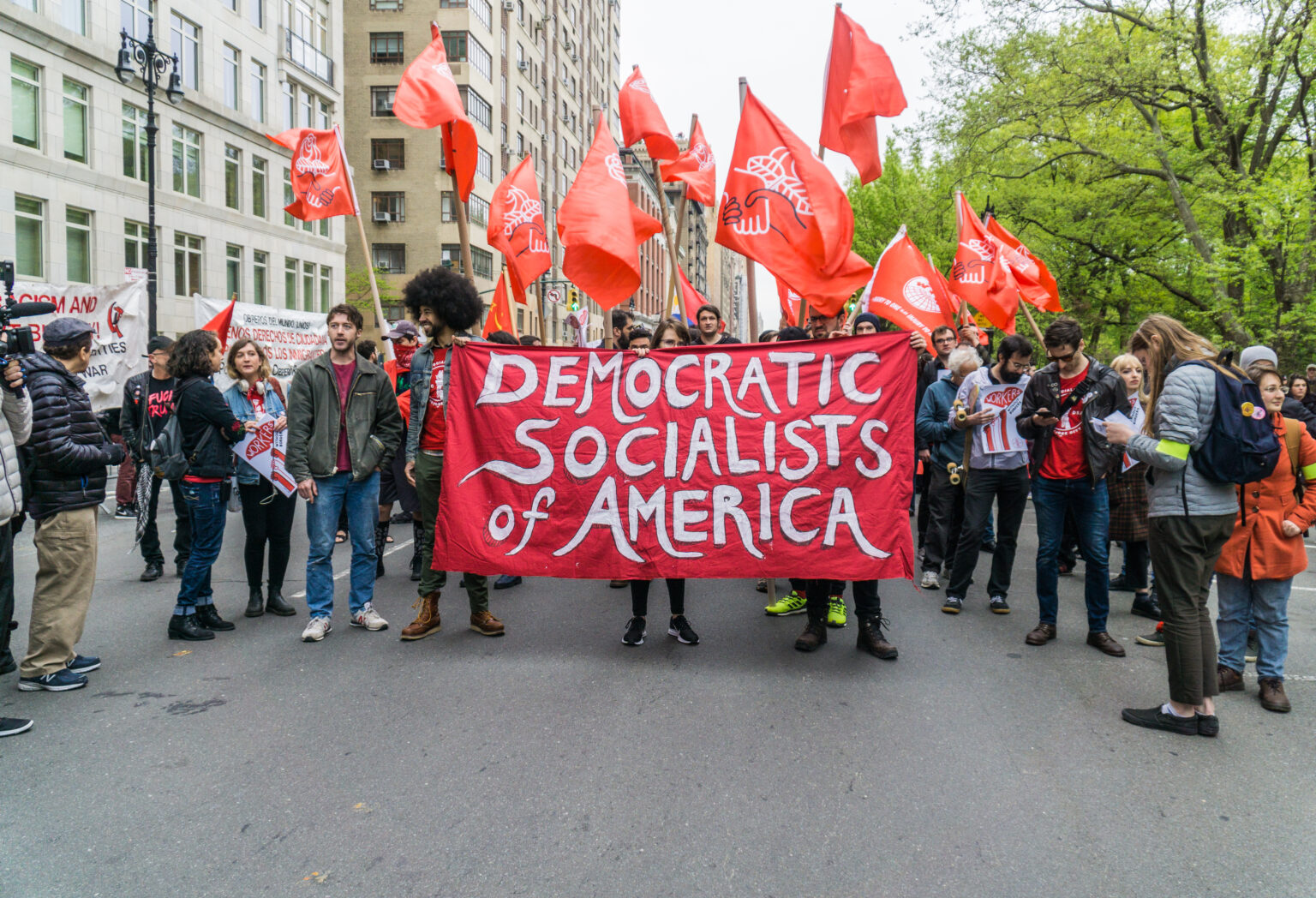
Polls find that, not only does a large majority of millennials have a favorable opinion of socialism, a near majority would prefer to live under socialism rather than capitalism. The no-longer sleeping Democratic Socialists of America (DSA) now boasts 30,000 members, most of them in their twenties and eager to follow the socialist banner. (Source.)
A new Quinnipiac poll found a majority of Democratic voters say they consider themselves supporters of the Democratic Socialists of America while the organization remains unpopular with the electorate as a whole. The survey found that 59% of Democrats identified themselves as DSA supporters, while 30% said they did not and 12% did not offer an opinion. (Source.)
And it's not just kids with minds full of mush that think socialism is cool. Lots of prominent and highly respected individuals have favored socialism:
Ralph Waldo Emerson, Walter Lippmann, Carl Sandburg, Upton Sinclair, Helen Keller, Charlie Chaplin, Ernest Hemingway, John Steinbeck, Orson Welles, Norman Mailer, Walter Reuther, Margaret Sanger, Betty Friedan, and Gloria Steinem, just to name a few. Francis Bellamy, author of the Pledge of Allegiance to the Flag, was an avowed Christian socialist. (Source.)
"I am convinced," wrote Albert Einstein in 1949, that "there is only one way to eliminate these grave evils [of capitalism], namely through the establishment of a socialist economy, accompanied by an educational system which would be oriented toward social goals. In such an economy, the means of production are owned by society itself and are utilized in a planned fashion." (Source.)
And so, because socialism sounds so great, many countries have leaped to embrace it.

Over the past hundred years, there have been more than two dozen attempts to build a socialist society. It has been tried in the Soviet Union, Yugoslavia, Albania, Poland, Vietnam, Bulgaria, Romania, Czechoslovakia, North Korea, Hungary, China, East Germany, Cuba, Tanzania, Benin, Laos, Algeria, South Yemen, Somalia, the Congo, Ethiopia, Cambodia, Mozambique, Angola, Nicaragua, and Venezuela, among others. All of these attempts have ended in varying degrees of failure. (Source.)
But the unrelenting failures do not calm the enthusiasm for socialism, generation after generation.
Every generation rediscovers socialism, and every generation has to relearn why it doesn't work. The word itself sounds noble. It promises fairness, equality, and moral renewal. But behind its rhetoric lies a recurring truth: socialism doesn't fail because of bad luck or bad leaders -- it fails because it collides with human nature and basic arithmetic. The early architects of socialism believed they had solved the age-old problem of exploitation. By transferring ownership of the means of production to "the people," humanity could supposedly achieve equality and harmony. Modern advocates of "democratic socialism" make a similar appeal, that justice requires redistributing wealth and equalizing outcomes. Historical evidence from socialist systems repeatedly demonstrates that when individuals are not directly rewarded for their work, productivity declines, creativity diminishes, and attempts to create equality often result in making nearly everyone poorer. (Source.)
Socialism is making a comeback. Why? Because it's easy. It costs you nothing to promise free stuff. It takes no effort to get applause by saying, "Tax the rich," "Cancel student debt," or "Health care is a human right." But ask this question: If socialism works so well, why are people always trying to escape from it? Why do people cross deserts, climb walls, and risk drowning to get to America and not Cuba? (Source.)
When you think of socialism, you probably think of the Soviet Union, North Korea, China, Cuba, or Venezuela. Yes, good examples, all. But socialism was tried here, as well.
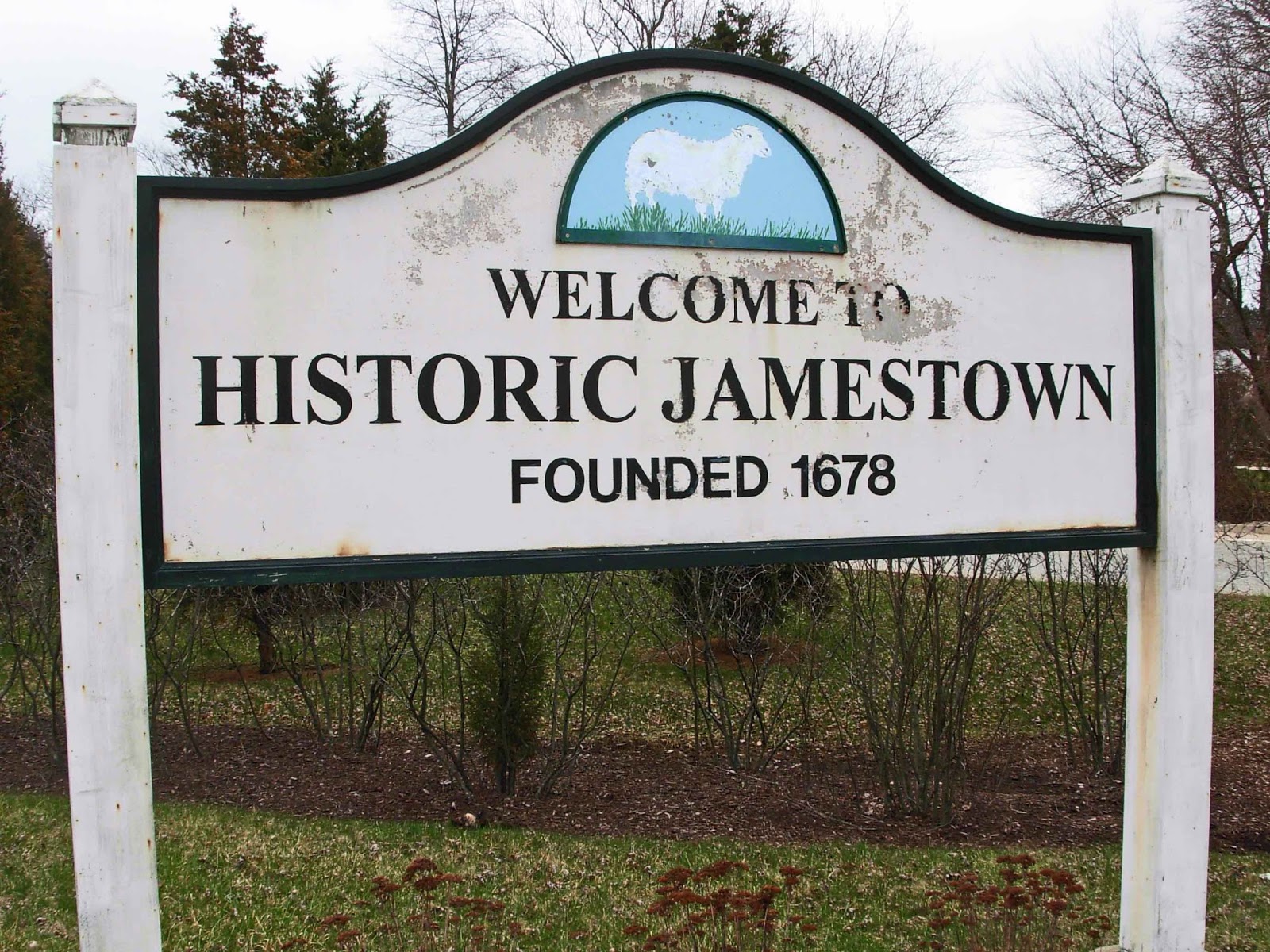
The very first settlements in America, Jamestown and Plymouth, adopted socialist precepts and wound up suffering socialist consequences: laziness, famine, and death. In Jamestown, socialism didn't give rise to a happy community of families pulling together for the greater good. Instead, it produced a shocking laziness even as people starved. When Jamestown abandoned socialism and moved to property rights and privatized agriculture, the results were immediate and resoundingly positive. Jamestown's governor, Sir Thomas Dale, began assigning three-acre plots to the settlers in 1614. Captain John Smith wrote that productivity improved "at least sevenfold." When people had ownership of their own harvests, they were compensated for how much work they put in, and they were further incentivized to work when they realized they could trade any surplus they produced to create greater wealth for themselves and their families. (Source.)

Jamestown's failed experiment with socialism was duplicated a few short years later by the Pilgrim setters of Plymouth. They, too, set up their land ownership to be fair and equal in which everyone shared in the work and shared the produce. Once again, people realized that avoiding work yielded the same reward as working hard. Under the banner of equality for everyone, the settlers of Plymouth suffered a famine lasting two years that threatened to stretch into three or more. Half the settlers died. (Source.)
Surely the catastrophes at Jamestown and Plymouth would forever put to rest the idea that socialism can succeed in America. But no, my goodness no. Socialism advocates kept popping up like nightmares.
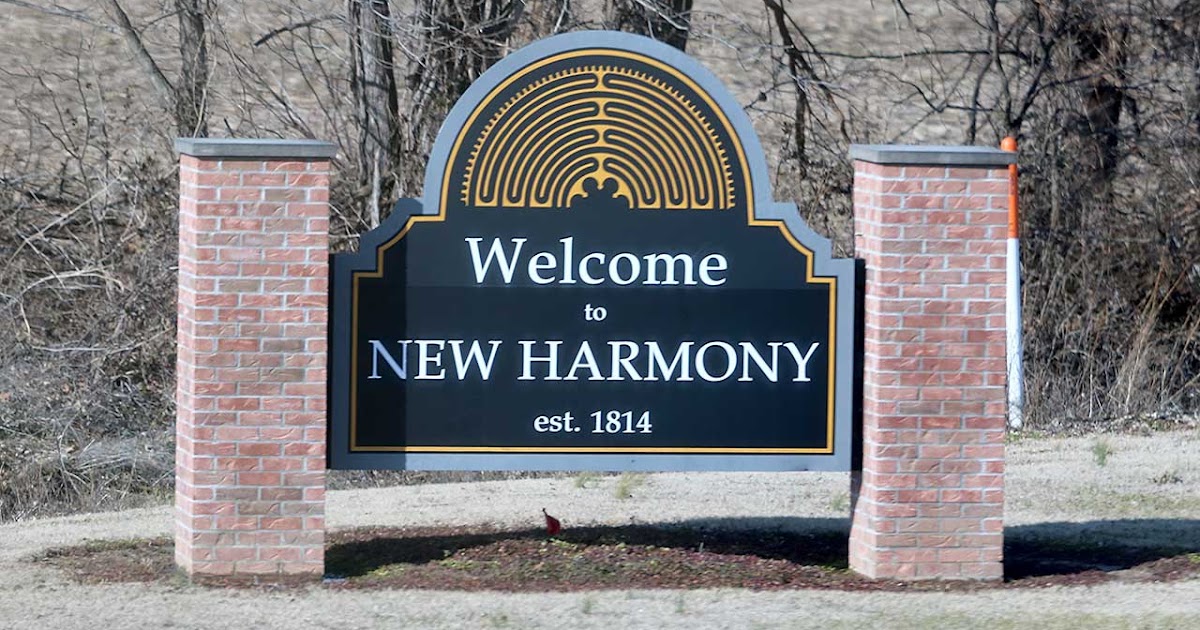
The tiny village of New Harmony, Indiana is something of a Midwestern utopia -- a beautiful slice of small-town Americana on the banks of the Wabash River. On April 27th, 1825, British industrialist Robert Owen purchased New Harmony from a religious community with grand plans to turn it into what he called "a new moral world." It was, as Owen put it, the perfect model of "utopian socialism." This would be a "community of equality" unlike any the country had seen before. Each of New Harmony's 800 residents would contribute his or her unique talents and share in the bounty they all were sure to produce together. Only they didn't. Almost immediately, Owen recognized that his grand community was "chaotic." Its residents lacked the motivation to work, while its government was unable to manage even the town's one general store. The community couldn't produce enough food to be self-sufficient, primarily because when its hardest-working members realized that they would earn the same benefits as the laziest, they stopped working. With no new houses being built for the growing community and food shortages becoming an epidemic, homelessness and famine ran rampant until eventually New Harmony's experiment with socialism ended in March, 1827. (Source.)
The New Harmony misadventure should have settled things, but of course it didn't.
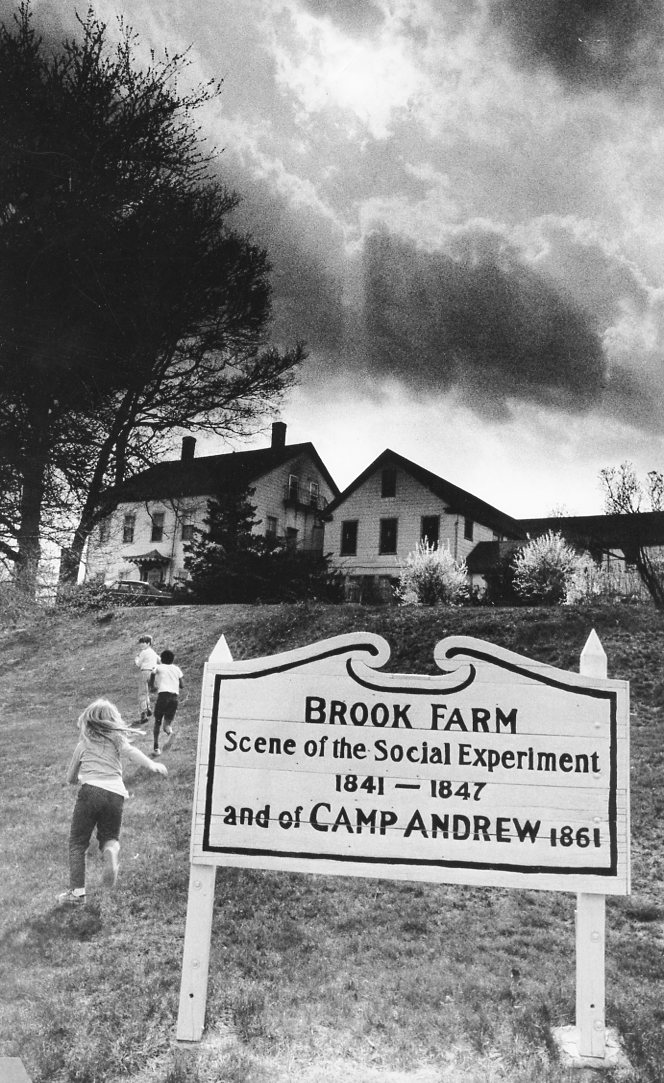
If any of the numerous utopian experiments had a chance of succeeding, surely it was Brook Farm, begun in 1841 by the transcendentalist Charles Ripley. Ripley and his team neatly divided the work at Brook Farm into six activities: school teaching, domestic tasks in and around living quarters, tasks dealing with buildings and grounds, farming, manufacturing, and recreation. With very few exceptions, everyone was paid the same wage regardless of which of the six categories of work they fell into. At the center of the communitarian life that Ripley sought was a flight from personal responsibility. There was a certain amount of homogenizing of people in this regard, so that no one would fully bear the brunt of his own poor choices. Ripley himself came to realize early that his attempt to blend individualism with collectivism was untenable. Within three years of the community's inception, he decided to go all in for collectivism. With Brook Farm facing internal dissension and mounting financial challenges by 1844, he opted to turn the whole operation over to the French utopian socialist Charles Fourier. Fourier postulated a "scientific reorganization" of society. The ideal, he argued, would be communities (he called them "phalanxes") of fewer than 2,000 persons in which people would "cooperate" for cooperation's sake. Daily life would be so arranged that everybody would do everything in groups -- meals, work, leisure, etc. They would even reside in one massive dwelling he called the "Phalanstery" where they shared virtually everything, even the rearing of the community's children. This "communitarianism" would promote harmony, prevent exploitation, end the "isolation" of family life, and focus every person's attention on the whole instead of the self. It was Fourierism that took a failing Brook Farm and in less than three years, killed it outright. The Brook Farm Phalanstery burned to the ground in March 1847. What Brook Farm and other utopian (and especially socialist) communities seek is essentially unachievabe in light of human nature: They want a triumph of exhortation over incentive, of intentions over results, of wishful thinking over actual performance. Socialists of today are a reasonable facsimile of 19th century utopian communitarians. They possess similar, anti-capitalist and anti-individualist motivations. They have big plans for a better world, if only it will conform to those plans. But unlike their utopian kinfolk of the 19th century, they aren't setting up experimental villages and trying through voluntary means to make them work. Perhaps they know that none of the previous attempts succeeded, so they propose to accomplish similar objectives through the political process and coercion. (Source.)
And the hippy culture -- remember that? -- also tried out socialism.
The same lesson repeated itself in San Francisco and elsewhere, when the utopian "free food" communes of the hip generation went the way of the dinosaurs. The hippies who provided the food got tired of feeding those whose only contribution was a hearty appetite. (Source.)
I suspect many -- at least some -- of those who advocate for socialism do not wish for what socialism ultimately delivers. They just want everybody to get along together. Socialism sounds like an attractive mechanism to achieve that end.
Socialists do not generally set out to create impoverished, oppressive disasters. When the Bolsheviks seized power in Russia in 1917, the gulags were not their endgame. Socialists often have the best of intentions. They don't intend for socialism to be oppressive and economically inefficient, it just works out that way every single time. (Source.)
When hard work, risk-taking, and creativity aren't rewarded, they diminish. As productivity declines, so does the standard of living for everyone. This is why socialist economies consistently underperform capitalist ones. You cannot make people equally rich by redistributing wealth -- you only make everyone equally poor. (Source.)
Socialism is founded on the idea that the individual will yield to the collective and eagerly adopt collective attitudes, values, and beliefs. But, human nature will not be bent.
People don't stop working out of laziness; they stop because effort no longer matters. Once outcomes are guaranteed, energy shifts from production to entitlement. Work is not just about earning money. It is about meaning, pride, and the freedom to improve one's life. Competition and personal ownership are not enemies of justice -- they are engines of progress. (Source.)
"When everybody owns something, nobody owns it, and nobody has a direct interest in maintaining or improving its condition. That is why buildings in the Soviet Union -- like public housing in the United States -- look decrepit within a year or two of their construction, why machines in government factories break down and are continuously in need of repair." -- Milton Friedman. (Source.)
What begins as generosity turns into dependency -- and eventually, despair. This is what might be called the moral fatigue of equality: When every outcome is equalized, ambition quietly dies. (Source.)
If socialism fails so consistently, why does it always return? Because it appeals to our moral imagination, it sounds righteous to say no one should go hungry or live in poverty. Its emotional power is immense. Modern advocates often rebrand the idea -- calling it democratic socialism or equity economics. Socialism survives not because it works, but because its promise is too compelling to be abandoned. Each generation forgets the lessons of the last. (Source.)
But, what about equality? Loud voices shout it out. We must have equality. Equality is fundamentally important. Well, no, it isn't. There will always be inequality. People have different skills, ambitions, desires, motivations. Nothing can change those intrinsic characteristics. Socialism tries, but always fails. Always.
Take inequality. It is real. The top one percent of Americans hold about a third of all wealth. The bottom fifty percent? They own just one fiftieth. That's a huge gap. So what? If I drive to work in an eight-year-old Ford Escape, should it bother me that Bezos has a fleet of private jets? If you live in your mom's basement, why are you upset that Taylor Swift owns a mansion on the beach? That inequality didn't come from "exploitation" or some evil Wall Street cabal. It came from growth. It is a natural outcome of a system that has lifted more people out of poverty than all government programs and charitable activities combined. Capitalism -- free enterprise, not cronyism -- created all innovations that make your life so easy compared to your ancestors. From the automobile, the airplane, and air conditioning to Uber, 3D printing, and SpaceX: all marvels of modern civilization came from the pursuit of profit, not government planning. Even the iPhones, the Internet service, and the platforms that clueless activists use to promote leftist ideologies, candidates, and policies were built by capitalists. (Source.)

And what about private property? Socialism views it as an evil that must be crushed. And there is only one way to crush it. Overwhelming governmental power and control.
Socialism typically abolishes or severely restricts private property. Without private ownership and the ability to reap personal rewards from effort and innovation, productivity declines, and economic stagnation follows. Because socialism requires extensive government control, it naturally expands state power at the expense of individual rights and freedom. This often results in authoritarian rule, as seen in the Soviet Union, China, North Korea, Cuba, and Venezuela. Whatever the theory of socialism might say, it killed 100 million people and ruined the lives of many more. Tyranny is not an accidental by-product of socialism; it lies at its very core. It is in its DNA. (Source.)
Socialism is always democratic and emancipatory in its aspirations, but oppressive and authoritarian in its actual practice. (Source.)
The end result has always been the same: tyranny and mass suffering. Ordinary citizens, the very people whom the socialists claimed to champion, were shot dead on the streets, thrown in prison camps, and deprived of the most basic human rights. What started as a well-meaning commitment to improve life for the masses brought about economic collapse, political oppression, and more than 100 million deaths across socialist societies. (Source.)
What sparks the eternal optimism that socialism can succeed? Somewhere. Somehow. At some future time, perhaps. If only it is administered properly, the intellectuals snort to us, if only it is done properly. That's all it takes.
Why does socialism always fail? It is not because of bad people who pervert a great ideal. The socialist system is not just inefficient, it is inhumane, because it is built on an evil idea. It takes away the incentives to produce because it violates human nature by denying the right to ownership and business initiative. Socialism can only be maintained by institutional violence. (Source.)
Socialism does not work because it is not consistent with fundamental principles of human behavior. The failure of socialism in countries around the world can be traced to one critical defect: it is a system that ignores incentives. In a capitalist economy, incentives are of the utmost importance. Market prices, the profit-and-loss system of accounting, and private property rights provide an efficient, interrelated system of incentives to guide and direct economic behavior. Capitalism is based on the theory that incentives matter! (Source.)

The main difference between capitalism and socialism is this: Capitalism works. (Source.)
The real choice we face is between imperfect capitalism and imperfect socialism. Given that choice, the evidence of history overwhelmingly favors capitalism as the greatest wealth-producing economic system available. (Source.)
Socialism. It's hard to think of another idea that has been tried and failed as many times in as many ways or at a steeper price in human suffering. (Source.)
Believing that people will happily work hard for the collective good while sacrificing their own interests is not just naive -- it's the definition of stupidity. (Source.)
When a good becomes scarce, its price rises, and that single signal tells producers to make more and consumers to use less -- without anyone needing to understand why. For Hayek, the price system is a remarkable mechanism that coordinates the decisions of countless people who never meet. Abolish private property and market prices, and you switch off this signaling system. (Source.)
In a market economy, the prospect of profit pushes entrepreneurs to take risks, cut costs, and invent new products. Under state ownership, that motivation disappears. Innovation is actively discouraged. A manager who introduces a more efficient process is often "rewarded" with a permanently higher production target and no extra benefit, which turns innovation from an incentive into a liability. (Source.)
The truth is, humans thrive in systems where effort and reward are linked, where individual freedoms are respected, and where markets, not bureaucrats, allocate resources. Capitalism may not be perfect, but it has consistently delivered higher standards of living, innovation, and prosperity. Socialism, by contrast, is a utopian illusion that always ends in failure. To believe otherwise is to ignore both history and common sense. (Source.)
In a planned economy, prices are set administratively rather than by supply and demand. The Soviet pricing body employed hundreds of officials to fix millions of prices, many of which stayed frozen for years. When prices cannot move, they cannot communicate scarcity or abundance. This is why centrally planned economies tend to swing between gluts and shortages, producing mountains of goods nobody wants while basic items vanish from shelves. Running a whole economy from the center requires agreement on a single set of goals. But a free society contains millions of people with different and conflicting aims. When democratic debate fails to produce the unanimity that planning needs, Hayek argued, the temptation grows to hand control to a small group or a strongman who can simply impose decisions. (Source.)
Because there is little upward mobility under socialism, socialist societies are characterized by two economic levels: a small, immensely wealthy ruling elite at the top, and at the bottom, the low-income masses forced to obey the dictates of their socialist masters. A large and prosperous middle class, like what we have in America, does not exist in countries with single-party socialist rule. (Source.)
Under central planning, there is no profit-and-loss system of accounting to accurately measure the success or failure of various programs. Without profits, there is no way to discipline firms that fail to serve the public interest and no way to reward firms that do. There is no efficient way to determine which programs should be expanded and which ones should be contracted or terminated. Without competition, centrally planned economies do not have an effective incentive structure to coordinate economic activity. Without incentives, the results are a spiraling cycle of poverty and misery. Instead of continually reallocating resources towards greater efficiency, socialism falls into a vortex of inefficiency and failure. (Source.)
Some are slow to learn. And it seems some never will. Socialism is a complete and utter failure. Worse, it kills and enslaves millions.
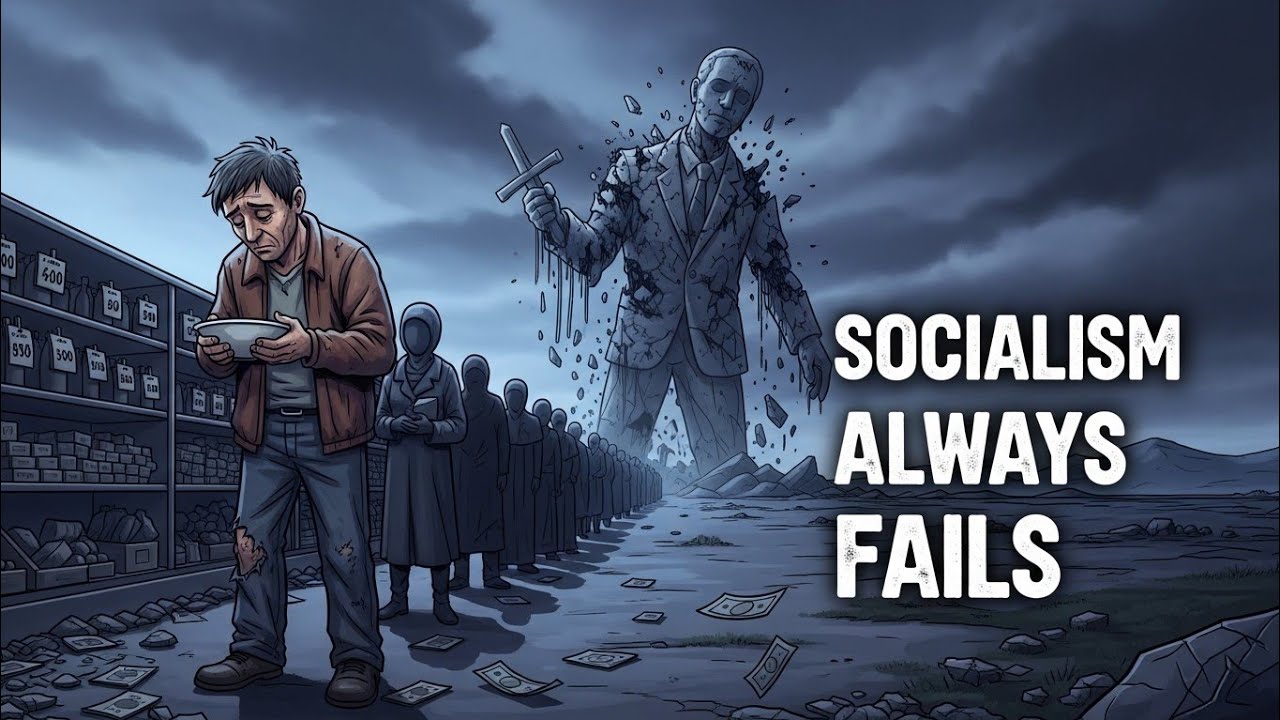
Having left an unbroken trail of failure in its wake, socialism is doomed to fail wherever it's tried, because it is in eternal mortal conflict with the basic human instinct that those who work hard, pursue advanced education, employ their ingenuity, or risk their capital have an inborn expectation to do significantly better than those who don't. As 18th century Scottish economist Adam Smith put it, "It is not from the benevolence of the butcher, the brewer, or the baker that we expect our dinner, but from their regard to their own self-interest." (Source.)
Sources of images:
https://home.adelphi.edu/~sp22223/socialism.html
https://yournews.com/2026/06/20/7069460/democratic-socialists-of-america-forming-red-rabbits-militia-network-echoing
https://fity.club/lists/suggestions/Which-Countries-Are-Socialist-Economies
https://qaqooking.wiki/all/how-to/welcome-to-plymouth-sign
https://geographicallyyourswelcome.blogspot.com/2014/03
https://louisvillefossils.blogspot.com/2018/12/new-harmony-indiana-visit.html
https://www.bostonglobe.com/2021/01/28/arts/chasing-painters-long-lost-rainbow-brook-farm/
https://www.pictorem.com/693171/vintage-private-property-sign
https://ar.inspiredpencil.com/pictures-2023/socialism-vs-capitalism
https://www.youtube.com/watch?v=NjFOVYrwdXc
|